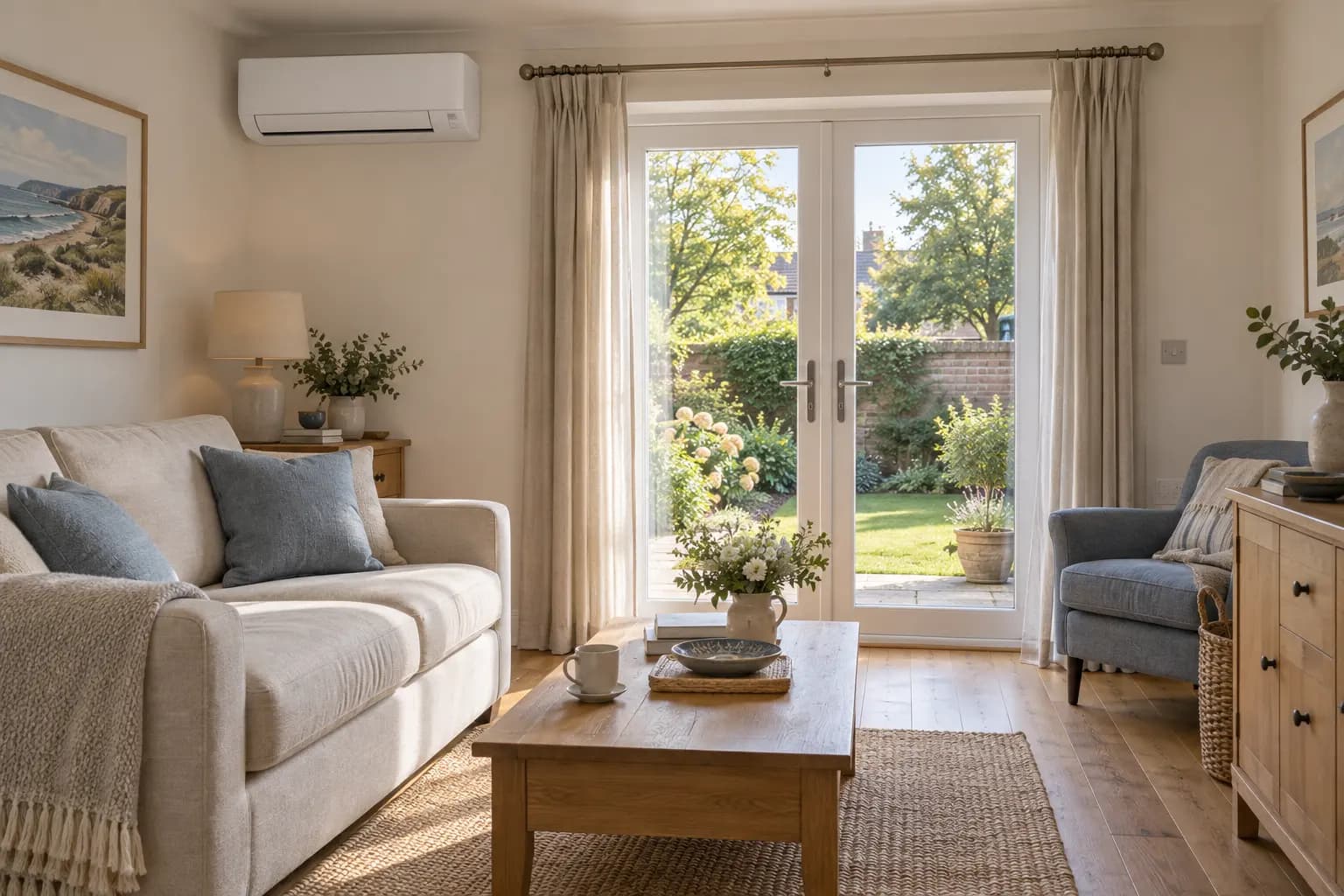
Decide what a comfortable night means to you
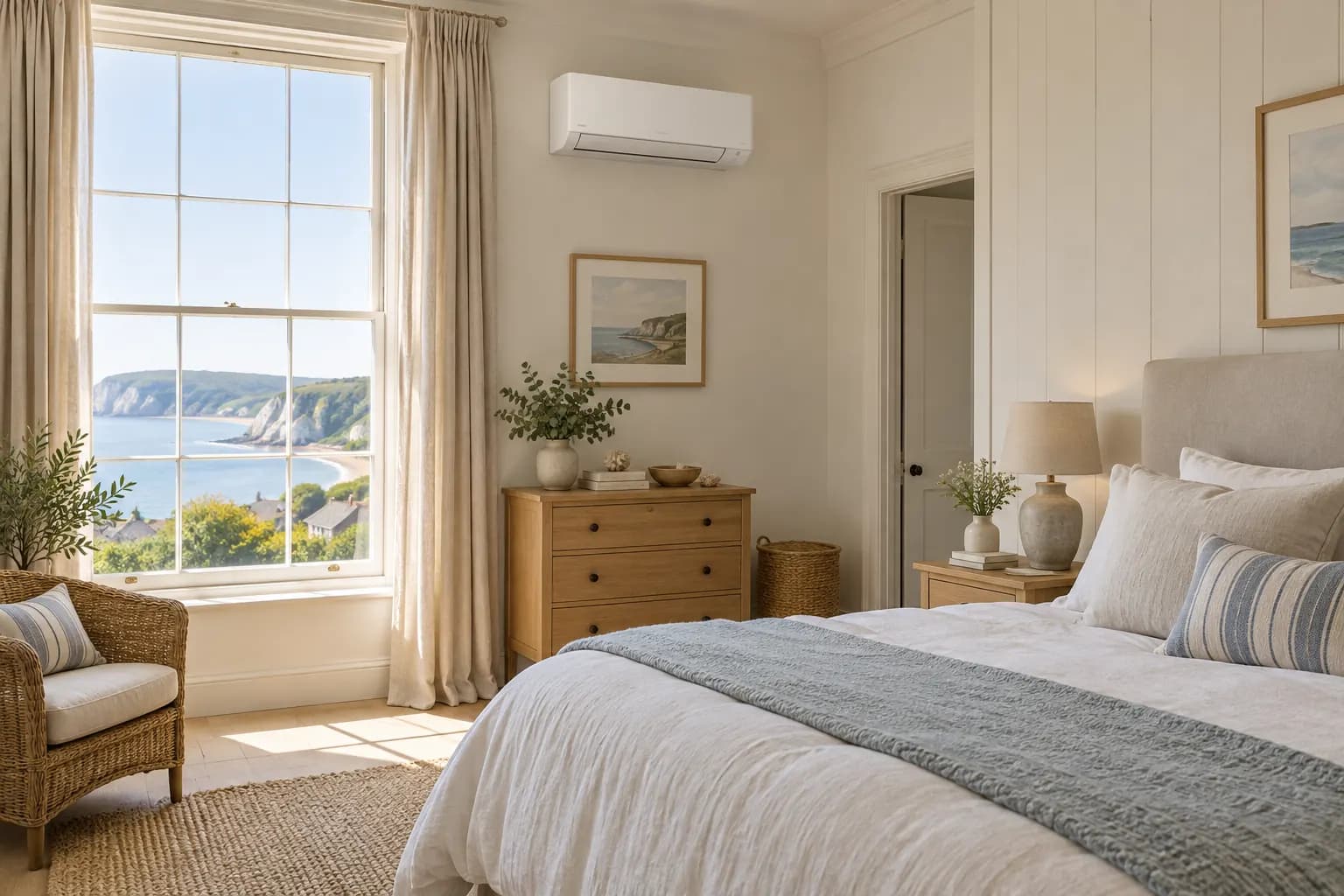
A bedroom installation should be planned around the bed, sleep routine and sensitivity to sound. Start by explaining when the room feels uncomfortable: early evening, through the night or after sunrise. Include whether the door normally stays closed and whether the room is also used as a daytime office.
Bring a photograph showing the bed, windows, wardrobes and possible wall positions. Mark any planned furniture changes. The best-looking empty wall may be a poor choice if the airflow would land directly on your face or if opening the unit for cleaning would require moving a tall wardrobe each time.
Follow the air path through the occupied space
Ask the installer to describe how air will travel from each proposed position. The aim is comfortable room conditioning without an unwanted direct draught across the pillow. Louvres and fan settings offer adjustment, but they should complement a sensible position rather than rescue one chosen only for its appearance.
Think about both sides of a double bed and anyone sitting nearby. A reading chair or desk may be occupied for longer than expected. Curtains must also remain clear of the unit's air path. Leave the manufacturer's required clearance and maintenance access; do not build a tight decorative enclosure around the equipment.
Compare sound information carefully
Request the sound figures for the exact proposed model and ask which operating conditions they describe. A quiet-mode figure is not a promise that every operating state will sound the same. Ask how the unit behaves when bringing a warm room down to temperature, and what settings are available once conditions are more settled.
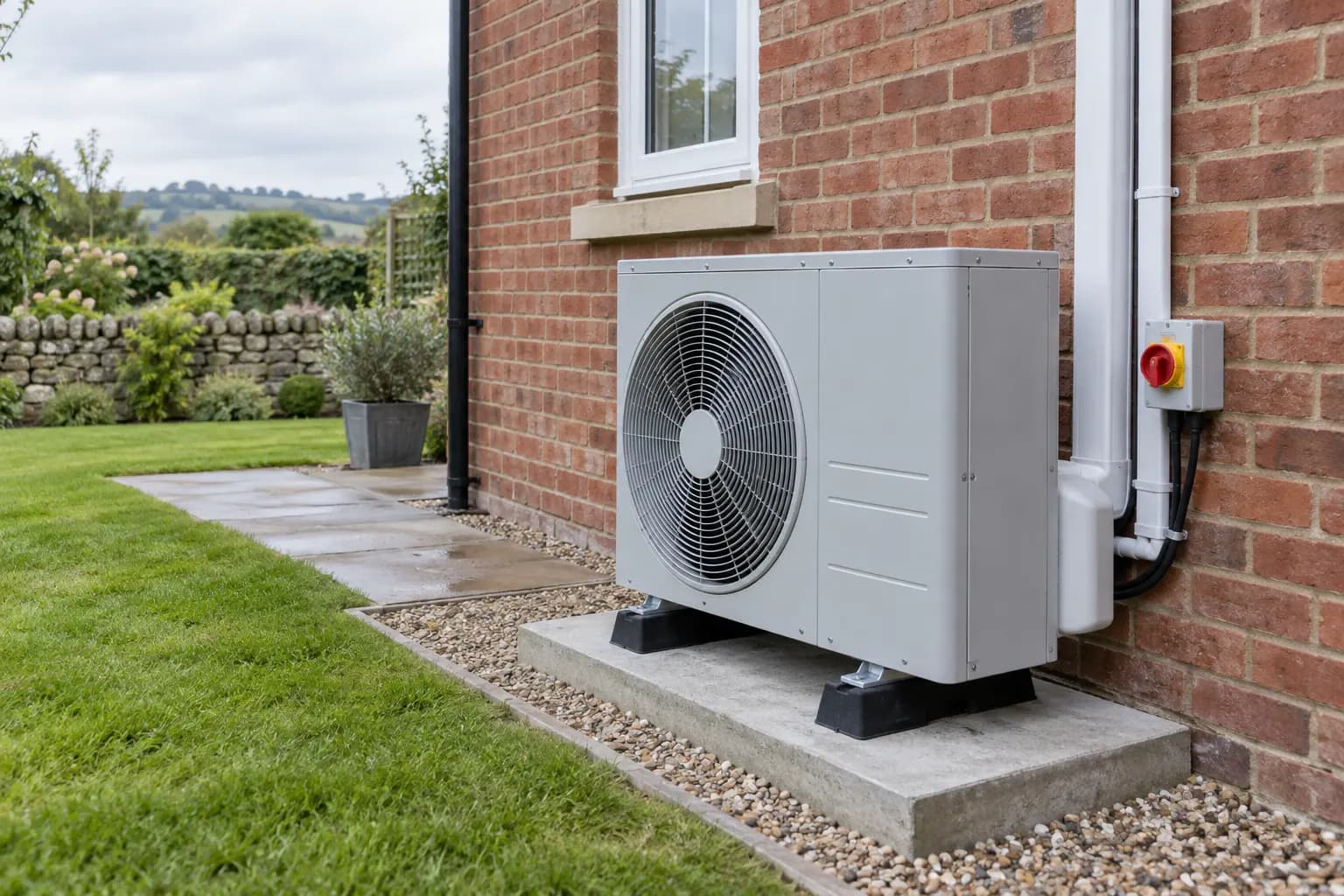
Discuss the outdoor unit too, particularly where windows, another bedroom or neighbouring spaces are nearby. If a condensate pump is proposed, include its operation in the conversation. Tell the installer if clicking controls, indicator lights or intermittent sounds bother you, and ask which settings can be adjusted. Avoid choosing on a single headline decibel figure without context.
Reduce unnecessary heat before sizing the system
Note which windows receive strong sun and what shading is available. Consider whether suitable blinds or other measures could reduce the afternoon heat entering the room. Insulation, glazing and occupancy information can help the installer understand the load; floor area alone does not describe the whole problem.
Keep ventilation needs in the discussion. A typical split AC recirculates room air; it does not replace the need for fresh air. Ask how to manage the room's normal ventilation alongside its heating and cooling routine. A comfortable temperature should not be mistaken for proof that ventilation is adequate.
Energy Saving Trust: air-to-air heat pumps and ventilation →
Use the handover to practise your evening routine
Before the installer leaves, practise selecting the mode, temperature, fan setting and timer. Check whether display lights or sounds can be adjusted on that model. Write down the setting you prefer, then make small changes as you learn how the room responds instead of repeatedly switching between extremes.
Ask how to clean the accessible filters safely according to the manual and when to book professional servicing. Keep the manual and model details somewhere easy to find. If a noise changes or water appears indoors, record what happened and contact an engineer rather than dismantling the unit.
- Show the bed and furniture layout during the survey.
- Ask about indoor, outdoor and any pump sound.
- Practise the timer and night settings at handover.